July 2026

Strategic Adaptation Defines the Second Half of 2026
As the foodservice industry moves deeper into the second half of the year, operators continue to balance growth opportunities with ongoing pressure from costs, traffic softness, labor constraints, food safety concerns, and evolving consumer behavior. While the environment remains challenging, July’s headlines show an industry continuing to adapt through disciplined expansion, operational investments, technology adoption, and more strategic approaches to value.
From new restaurant formats and off-premise growth to leadership changes, food safety developments, and supply chain planning, this month’s stories highlight how operators, suppliers, and distributors are positioning themselves for long-term performance in a dynamic marketplace. Here’s what we’re watching this month.

Market of the Month

Technomic’s Market of the Month - Huntsville, AL
Market of the Month — Huntsville, AL
Huntsville is one of the fastest-growing foodservice markets in the Southeast, fueled by a strong economy, population growth, and a highly educated workforce tied to the aerospace, defense, and technology sectors. According to Technomic's Ignite Company market-level insights, the market includes 1,472 foodservice locations and generated approximately $1.82 billion in 2025 sales, with growth expected to accelerate to 9.3% in 2026 following a 7.6% increase in 2025. The market ranks as the 94th-largest U.S. foodservice market based on sales.
While Huntsville is smaller than many major metropolitan markets, its above-average household income levels and continued population growth create opportunities across quick-service, full-service, and noncommercial foodservice segments. Limited-service restaurants represent the largest share of the market and are projected to continue leading growth through 2026.
Demographics & Market Dynamics Driving Growth
Huntsville's foodservice landscape reflects a growing, affluent consumer base with strong demand for convenience, family dining, and branded restaurant concepts. The market over-indexes among households earning $100,000–$149,999 and has a larger-than-average Black/African American population relative to the national average.
Key market insights:
Population: ~527K (0.2% of the U.S. population)
1,472 foodservice locations serving the market
Over-indexing households earning $100K–$149K (Index 115)
Strong concentration of chicken concepts (Index 200) and burger concepts (Index 145) relative to national averages
Limited-service restaurants account for the largest share of projected foodservice sales growth through 2026
These factors continue to drive demand for quick-service restaurants, family dining concepts, and convenience-focused foodservice offerings, while creating opportunities for distributors supporting a market with strong growth momentum and favorable demographic trends.
Learn more about [Technomic Ignite Company Industry Market Size Data]
Safety and Savings. It Starts with a Spray.
A greasy hood vent isn't just a tough cleaning job — it can be a serious liability. Failure to clean contributes to 22% of all restaurant fires and millions in damages annually.* Winning the battle against grease has never been more critical.
So how do you can you tackle greasy hood vent filters without losing time and money? Dawn PRO Heavy Duty Powerwash.
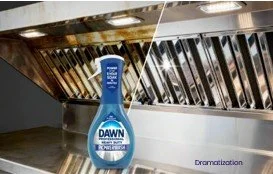
Engineered with 3 cleaning boosters not found in traditional dish soaps, Dawn PRO Heavy Duty Powerwash is both safe and powerfully effective. It melts away tough grease, helping one customer slash their chemical spend by 50%** and reduce scrub time by up to 15 minutes.***
Protect your business, cut down on costs, and get your team home sooner. See it in action.
* NFPA Structure Fires in Eating and Drinking Establishments 2017
** Estimated reduced monthly chemical spend vs. previous program
*** Vs. previous cleaning procedure
Industry News
Food Safety Concerns Create Traffic Headwinds for QSR and Fast Casual
Consumer confidence can shift quickly when food safety concerns make national headlines. In July, Taco Bell and several lettuce-focused fast-casual brands experienced noticeable traffic declines after federal health authorities linked shredded iceberg lettuce served at select Taco Bell locations to a multistate cyclospora outbreak. According to Restaurant Dive, Taco Bell visits fell by double digits, with traffic dropping as much as 30% on July 17 based on Placer.ai data.
The situation highlights how rapidly food safety events can influence purchasing behavior and restaurant performance.
Key takeaways:
Food safety incidents can significantly impact guest traffic within days.
Consumers increasingly expect transparency and timely updates from brands.
Operators are placing greater emphasis on traceability and supplier accountability.
Recall readiness remains a critical component of risk management.
For distributors and suppliers, the outbreak reinforces the importance of end-to-end visibility, strong supplier partnerships, and having processes in place to quickly respond to food safety events.
Restaurant Sales Show Resilience, But Traffic Remains Uneven
Restaurant sales continued to move higher in June, with eating and drinking establishments reaching a seasonally adjusted $102.5 billion, according to the National Restaurant Association. While the topline growth reflects ongoing consumer spending on dining experiences, operators are still navigating traffic fluctuations and increasingly value-conscious guests.
Many restaurants are balancing sales gains with continued pressure on labor, food costs, and profitability.
Operators are responding by:
Expanding value-oriented menu offerings.
Promoting loyalty and rewards programs.
Streamlining operations to improve margins.
Creating affordable premium menu experiences.
For distributors and suppliers, the trend highlights the continued need for cost-effective products, menu innovation support, and operational solutions that help customers protect both traffic and profitability.
[National Restaurant Association]
Global Flavors Continue Gaining Momentum in Foodservice
Consumer demand for globally inspired menu items continues to reshape restaurant innovation. Food Business News reported that cuisines influenced by Africa, India, and South Korea are among the fastest-growing flavor profiles appearing on U.S. menus, as operators look for ways to offer unique dining experiences without dramatically increasing costs.
Industry research suggests consumers remain highly interested in authentic flavors while also appreciating approachable menu introductions.
Trending areas include:
African-inspired spices and sauces.
Korean flavors, including gochujang and Korean barbecue.
Indian street food influences and regional seasonings.
Fusion applications that blend global flavors with familiar formats.
For operators, global flavor innovation provides an opportunity to drive excitement, differentiate menus, and create limited-time offerings that attract adventurous diners.
Store News
Leadership changes across major brands continue to reflect where the industry is investing for the future:
Angry Chickz Expands Southern California Footprint
Angry Chickz continued its rapid growth with the opening of a new restaurant in Palmdale, California, marking the brand’s 37th location in California and 42nd systemwide as it expands its Nashville hot chicken concept. Full Story
Bojangles Nears 900-Store Milestone Following Strong Growth
Bojangles opened 25 new restaurants across 12 states during the first half of 2026 as the brand expands into new markets and approaches its milestone 900th location. Full Story
Cousins Subs Opens New Green Bay Location
Cousins Subs expanded its Wisconsin footprint with a new restaurant in Green Bay, continuing the brand’s focus on franchise growth and community-based expansion. Full Story
D-Spot Dessert Café Enters U.S. Market With First Location
Canadian dessert chain D-Spot Dessert Café opened its first U.S. location in Dallas, launching its planned U.S. expansion strategy with additional markets including Houston, Atlanta, Chicago, and Nashville. Full Story
Giordano’s Expands Minnesota Presence With Mall of America Opening
Giordano’s opened its second Minnesota location at Mall of America, bringing its Chicago-style stuffed deep-dish pizza experience to one of the country’s largest retail and entertainment destinations. Full Story

Store News (Continued)
Just Salad Opens New Locations in New Jersey and Pennsylvania
Just Salad continued its fast-casual expansion with new restaurants in Woodbridge, New Jersey, and Willow Grove, Pennsylvania, strengthening its presence in the Northeast. Full Story
KFC Opens New Restaurant in Arizona
KFC expanded its Arizona presence with a new Sun City location operated by franchise partner Pak Foods, marking the operator’s 84th KFC restaurant and further strengthening the brand’s footprint in the Southwest. Full Story
Portillo’s Announces New Wrigleyville Restaurant
Portillo’s announced plans to open a new restaurant in Chicago’s Wrigleyville neighborhood, continuing its investment in its hometown market and expanding access to its iconic Chicago-style menu. Full Story
Qdoba Plans Major Expansion in Nashville and Atlanta
Qdoba announced development agreements that will bring approximately 50 new restaurants to the Nashville and Atlanta markets as part of the brand’s broader goal of accelerated franchise growth. Full Story
Raising Cane’s Accelerates U.S. Expansion With Five New Restaurants
Raising Cane’s announced five new restaurant openings in July, including first-ever locations in Tennessee, North Carolina, and Georgia, along with several remodeled restaurants as part of its continued growth strategy. Full Story

Executives on the Move
Leadership changes across major brands continue to reflect where the industry is investing for the future:
Denny's appointed Aaron Howard as Chief Operating Officer, adding the former Cracker Barrel executive to lead operational improvements and guest experience initiatives as part of the company's turnaround strategy. Full Story
Firebirds Wood Fired Grill appointed Florence Ho as Chief Marketing Officer, bringing the hospitality marketing veteran aboard to lead brand strategy, guest engagement, and marketing initiatives as the polished-casual brand continues its national expansion. Full Story
Fogo de Chão named Daniel Duran Chief Financial Officer, succeeding longtime CFO Tony Laday and leading the global steakhouse brand's financial strategy as it continues domestic and international growth. Full Story
International Dairy Queen appointed Phil Crawford as Executive Vice President and Chief Technology Officer, bringing the former Shake Shack and CKE Restaurants executive aboard to oversee digital innovation and global restaurant technology. Full Story
KFC Global promoted Maria Cacciapuoti to Chief Operating Officer, elevating the longtime company executive to lead global operations and partner with franchisees to modernize restaurant execution and the guest experience. Full Story
McDonald's USA named Bryan Brown Chief Development Officer, hiring the former Raising Cane's executive to oversee restaurant development, construction, and modernization efforts across the U.S. system. Full Story
TriMark USA appointed James Noonan as Chief Executive Officer, promoting the longtime Chief Financial Officer following Terry O'Brien's retirement to lead the foodservice equipment and supplies distributor through its next phase of growth. Full Story
Whataburger named Ryan Moore Chief Financial Officer, bringing the former Torchy's Tacos finance executive aboard to oversee financial strategy and support the company's continued expansion. Full Story

Supply Chain News
Foodservice Companies Continue Investing in Visibility and Automation
Supply chain leaders are accelerating investments in technology designed to improve visibility, predict disruptions, and enhance operational efficiency. According to Logistics Viewpoints, organizations are increasingly deploying real-time tracking platforms, digital twins, AI-powered control towers, and automated scheduling solutions throughout their supply chains.
The goal is to create faster, more informed decision-making while reducing manual processes.
Companies are focusing on:
Real-time inventory and shipment visibility.
Automated disruption monitoring.
Warehouse optimization and scheduling tools.
AI-driven forecasting and decision support.
For distributors, the continued shift toward automation underscores the growing importance of technology investments that improve service reliability, operational efficiency, and customer satisfaction.
Cold Chain Demand Continues to Rise Amid Growing Capacity Pressures
Demand for refrigerated and frozen transportation continues to grow as consumers increasingly favor convenience-focused and temperature-sensitive food products. At the same time, transportation costs, freight availability, and infrastructure constraints remain ongoing challenges across the cold chain.
Industry leaders are focusing on strategies that improve efficiency while maintaining product integrity.
Areas receiving increased attention include:
Network optimization and route efficiency.
Real-time temperature monitoring.
Inventory visibility improvements.
Strategic transportation capacity planning.
For foodservice distributors and suppliers, maintaining cold chain reliability remains essential to controlling costs, minimizing waste, and meeting customer service expectations.

Economic Pulse
Restaurant Industry Job Growth Slows in June
Restaurant hiring reversed course in June as foodservice and drinking establishments shed nearly 33,000 jobs, according to industry reports. The decline reflects ongoing labor market uncertainty as operators continue balancing staffing needs against fluctuating traffic patterns and operating costs.
While employment levels remain relatively strong compared to pre-pandemic benchmarks, many operators are taking a measured approach to workforce expansion.
Current labor challenges include:
Ongoing recruitment difficulties.
Wage and benefit pressures.
Traffic-related staffing adjustments.
The need to improve productivity with leaner teams.
For distributors and operators alike, labor availability continues to be an important factor influencing service levels, operating hours, and overall business performance.

Regulatory Update
FDA Continues Focus on Food Traceability Implementation
The FDA continued its outreach and education efforts related to the Food Traceability Rule throughout July, providing additional resources, readiness guidance, and updated FAQs. The rule requires covered entities handling foods on the Food Traceability List to maintain Key Data Elements associated with Critical Tracking Events and make that information available when required.
As implementation planning continues, traceability remains a major focus area across the food industry.
Organizations are preparing by:
Evaluating traceability technology solutions.
Strengthening recordkeeping processes.
Reviewing supplier compliance programs.
Conducting readiness assessments and training.
For distributors, suppliers, and operators, traceability remains both a regulatory requirement and an important tool for improving food safety response capabilities.
[U.S. Food and Drug Administration]
FSIS Expands Regulatory Support and Testing Capabilities
The Food Safety and Inspection Service (FSIS) announced several July updates designed to streamline regulatory processes and strengthen food safety oversight. The agency introduced a new web form to simplify appeals of noncompliance records, launched an inactive inspection directory to support export verification activities, and expanded animal drug residue testing capabilities.
These changes reflect ongoing efforts to improve transparency and support industry compliance.
Key updates include:
Simplified submission processes for appeals.
Enhanced export verification resources.
Expanded food safety testing programs.
Additional compliance support tools for industry stakeholders.
For processors, distributors, and suppliers, the updates signal continued regulatory focus on compliance readiness, operational transparency, and consumer confidence.