January 2026

Save the Date for DMA’s Party at the Post Office!
As we gear up for another exciting year in foodservice, we’re thrilled to share that our premier rooftop reception is returning to one of Chicago’s most iconic spaces — the Old Post Office. On the eve of the National Restaurant Show, this one‑of‑a‑kind evening brings together chain operators from across the country to reconnect, network, and celebrate the industry we love. It’s your chance to meet the leadership of DMA member distributors, catch up with peers from top operators nationwide, and take in the skyline from a truly unforgettable venue.
The event is open to all chain operators, with registration coming soon. Be sure to secure your badge as soon as it becomes available. We can’t wait to welcome you as we celebrate the start Restaurant Show week in style!

Hello from DMA…
As we kick off 2026, one thing is clear: the foodservice industry is entering the year with focus. Operators are leaning into value and execution, distributors are sharpening supply chain performance, and leadership teams across major brands are setting the tone for what comes next.
Here’s a look at the stories shaping foodservice right now — and what they could mean for all of us.

Industry News
Atlanta Market Spotlight: Built for Growth
Atlanta continues to stand out as one of the most dynamic foodservice markets in the U.S. Backed by Technomic’s Ignite Company industry market size data, the latest insights show a market with 18,000+ locations, $20B in sales, and strong growth projected into 2026 and beyond. It’s the sixth-largest foodservice market in the U.S. based on 2025 sales, making it a critical region for brands looking to expand or strengthen their footprint.
From a dense, competitive restaurant landscape to a diverse, high-value customer base, Atlanta presents real opportunity for growth-minded operators and partners who know how to navigate it.
Demographics Driving Demand
Atlanta’s demographics are a major force behind its foodservice performance. The market combines purchasing power, cultural influence, and population scale — creating demand across a wide range of concepts and price points.
Key demographic insights:
Population: 6.3M (2.2% of total U.S. population)
Over-indexing ages 45–54 (Index: 112)
Over-indexing households earning $150K+ (Index: 115)
Significant over-indexing Black/African American population (Index: 277)
These dynamics create opportunity for brands that understand their audience and tailor offerings accordingly — whether that’s premium experiences, culturally relevant menus, or convenience-driven solutions.
If you’d like to take a deeper dive in the data, trends, and what it means for success in this key market, email Cassie Norris - cassie.norris@dmadelivers.com
Source: Technomic Ignite Company industry market size data
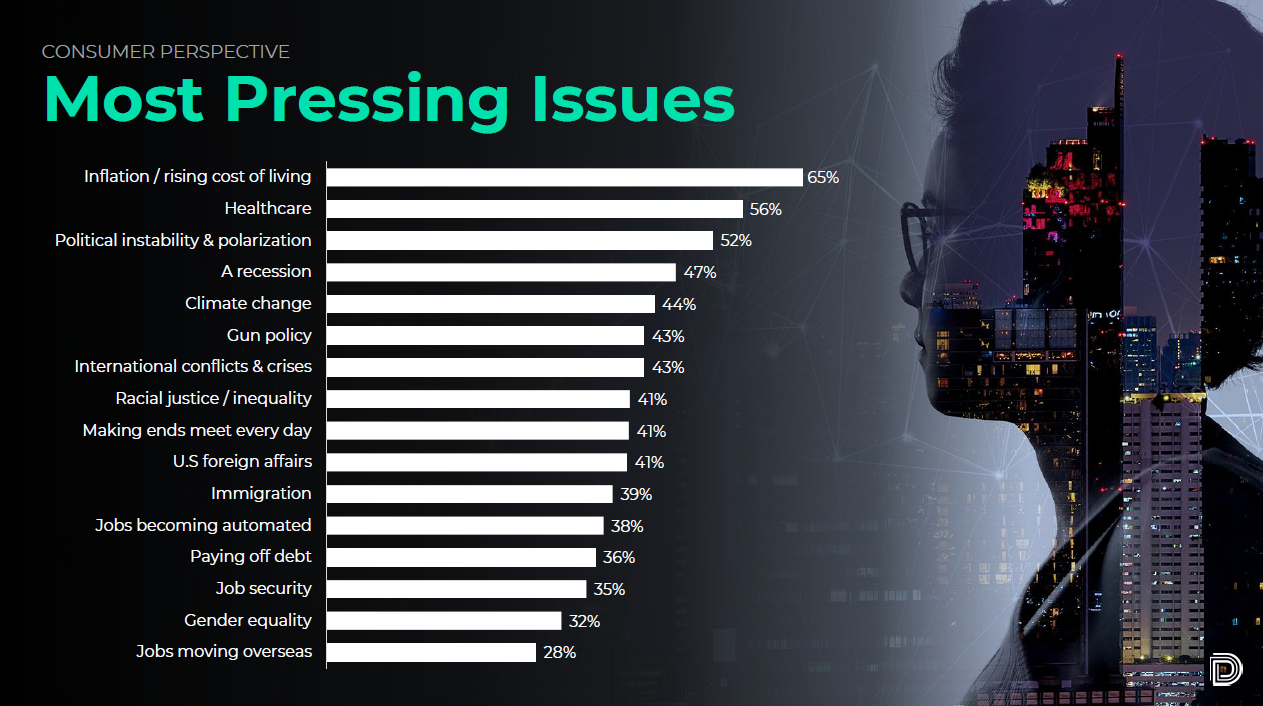
Source: Datassential, Simply Smarter Webinar, January 8, 2026
“It’s a Whole New Food Pyramid”
The latest 2025–2030 Dietary Guidelines for Americans (DGAs) represent what federal officials are calling the most significant reset of U.S. nutrition policy in decades, emphasizing a decisive pivot back to a Food Pyramid format — but with a modern twist. The newly unveiled graphic, presented jointly by HHS Secretary Robert F. Kennedy Jr. and USDA Secretary Brooke Rollins, takes the form of an upside‑down pyramid that prioritizes whole, nutrient‑dense foods at the top.
What the New Pyramid Prioritizes
According to the guidelines, Americans should center their diets around:
Protein, dairy, and healthy fats
Vegetables and fruits
Whole grains
These categories make up the bulk of the inverted pyramid, signaling a return to “real food” fundamentals and a move away from the more abstract MyPlate model used since 2011.
Shift From Scientific Committee Recommendations
Notably, the final guidelines diverge from some recommendations made by the Dietary Guidelines Advisory Committee. The Committee had emphasized greater reliance on plant‑based proteins, but the final DGAs lean more heavily toward animal‑based protein and dairy, reflecting Kennedy’s Make America Healthy Again (MAHA) agenda.
Policy Impact and Intent
This new framework will shape major federal nutrition programs, including the National School Lunch Program, and signals the administration’s intent to recalibrate U.S. food policy around whole, minimally processed foods while dramatically reducing ultra‑processed ingredients and added sugars. The MAHA Commission’s earlier strategy report (September 2025) foreshadowed these changes, emphasizing simplicity, whole‑food messaging, and alignment with “real food” principles. [feedstuffs.com]
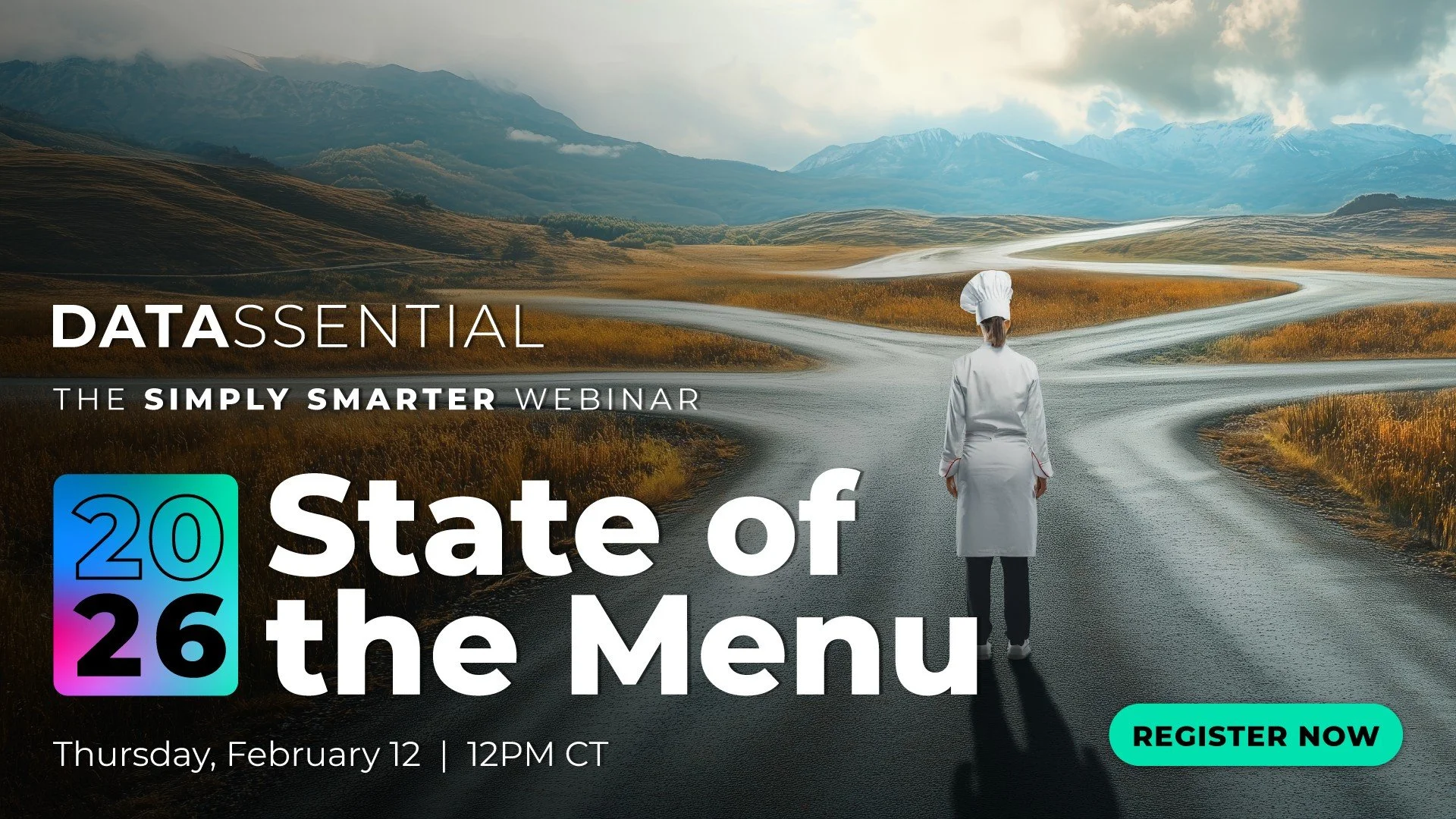
Don't miss Datassential's annual State of the Menu next month on Thursday, February 12 at 12 pm CT, where you will delve into standout menu items, emerging trends, and rising foods, flavors, and ingredients for the year ahead. Register now
Industry News (Continued)
ICR Conference 2026: Restaurant Sector Outlook Themes
The 2026 ICR Conference highlighted a cautiously optimistic tone among restaurant operators as they head into FY26. While consumer spending remains resilient, operators emphasized that diners are becoming more intentional — managing visit frequency, party size, and add‑ons — making clear value communication more important than ever. Restaurants are responding by shifting away from broad discounting and instead adopting surgical, targeted value offers designed to protect margins without eroding brand perception.
Operators also reported that commodity cost pressure, especially beef and key proteins, remains elevated, but visibility is improving through better contracting and disciplined pricing strategies. At the same time, labor headwinds are easing compared to the past two years, with moderating wage inflation and more stable retention trends allowing brands to refocus on throughput and productivity rather than survival mode staffing.
Marketing strategies are evolving as well. Brands are moving from mass‑reach advertising toward performance‑driven campaigns powered by first‑party data, loyalty programs, and CRM insights. Many are building large customer files through apps, Wi‑Fi opt‑ins, waitlists, and digital ordering — then using that data to drive actual trips rather than impressions.
Two macro forces — GLP‑1 adoption and the growing MAHA (Make America Healthy Again) influence on dietary patterns — are shaping menu innovation. Operators expect GLP‑1 users to reduce high‑calorie add‑ons (alcohol, indulgent sides) but maintain overall meal demand, especially for higher‑protein options, which aligns neatly with MAHA‑driven consumer preferences for protein, fiber, and “cleaner” ingredients.
Together, these themes suggest a restaurant industry that is becoming more analytical, value‑savvy, operationally disciplined, and health‑trend responsive as it heads into a dynamic 2026.
Source: Stephens Inc., ICR 2026 Recap (Restaurants), Jan. 15, 2026

Store News
Applebee’s debuts the O-M-Cheese Burger as a value-driven signature.
Applebee’s introduced the O-M-Cheese Burger ($11.99), combining cheddar-filled goodness with broad appeal and menu value — part of its effort to fine-tune offerings in 2026. Full Story
Buffalo Wild Wings kicks off the year with January value offers.
Buffalo Wild Wings is running its Month of Free promotion through Feb. 2 for Rewards members, offering a rotating calendar of free items (boneless wings, sandwiches, appetizers) and delivery perks tied to minimum purchases — a strong early-year value play for guests. Full Story
Burger King debuts the Ultimate Steakhouse Whopper.
Burger King added the flame-grilled Ultimate Steakhouse Whopper to its lineup — a premium burger with bacon, onion rings, mushrooms, Swiss cheese, and peppercorn aioli — as part of its customer-inspired innovation push. Full Story
Chick-fil-A kicks off its “Newstalgia” celebration for its 80th year.
Chick-fil-A launched year-long retro inspiration events, new menu items like frosted sodas & floats, and collectible cups, blending nostalgic brand passion with fresh guest offers. Full Story
Chipotle offers free double protein to Rewards members mid-January.
Chipotle rolled out a one-day free double protein promotion for Rewards members on Jan. 13, redeemable via the Chipotle app and Chipotle.com using code PROTEIN — a digital drive tactic tied to January fitness and digital engagement patterns. Full Story
Cracker Barrel revamps its winter menu with Meals-for-Two value pricing.
Cracker Barrel’s seasonal lineup brings back classic favorites with a Meals for Two offering starting at $19.99 — a compelling way to drive weekday traffic and deliver comfort value. Full Story

Store News (Continued)
Dutch Bros acquires Clutch Coffee Bar to expand presence in the Carolinas.
Dutch Bros is acquiring a 20-unit Clutch Coffee Bar chain in the Carolinas as part of its aggressive expansion plan. A move strengthening both footprint and potential breakfast/food offerings this year. Full Story
Gyro Republic announces a nine-restaurant Texas expansion in 2026.
Houston-based fast-casual Gyro Republic plans to open nine new Texas locations in 2026, adding Austin, San Antonio, and Dallas sites and actively seeking franchise partners as part of its breakout growth year. Full Story
Pizza Inn celebrates the new year with an $8 All-You-Can Buffets.
Pizza Inn expanded its $8 weekday buffet to select locations through late January, a strong value messaging play as price-sensitive guests weigh dine-in options. Full Story
Noodles & Company doubles planned restaurant closures.
Noodles & Company announced it will close up to 30–35 additional underperforming restaurants in 2026 — more than originally planned — as part of its turnaround strategy focused on strengthening long-term profitability and refocusing resources on operating units. Full Story
Taco Bell launches a new $3 Luxe Value Menu nationwide.
Taco Bell introduced its Luxe Value Menu on Jan. 22, featuring 10 items (five new and five fan favorites) all priced at $3 or less — blending innovation with value as customers remain price conscious in 2026. Full Story
Texas Roadhouse confirms February opening of a new NJ location.
Texas Roadhouse is converting a former restaurant site into a new Burlington County, NJ location set to open Feb. 2, part of a broader plan to roll out 30+ new restaurants across the U.S. in 2026. Full Story
Executives on the Move
Leadership changes across major brands continue to reflect where the industry is investing for the future:
Blaze Pizza appointed John Owen as CEO, bringing operational and strategy experience from Subway and McDonald’s to guide the brand’s next phase of growth. Full Story
CAVA announced Doug Thompson as Chief Operating Officer, reinforcing its commitment to operational excellence as the fast-casual brand scales. Full Story
Dave’s Hot Chicken named Joshua Liggins Vice President of Franchise Development, signaling continued momentum in unit growth and franchising. Full Story
White Castle promoted Jamie Richardson to Chief Marketing Officer following the retirement of Lynn Blashford. Richardson will lead brand storytelling and consumer engagement across restaurants and retail channels. Full Story
Wingstop appointed Rajneesh Kapoor as Chief Operating Officer, reestablishing the role to support operations and franchise growth. Full Story
Supply Chain News
Meatpackers Face Turning Point as China Beef Quotas Hit Brazil
China’s newly imposed beef import quotas are creating a pivotal moment for Brazil’s meat industry, which has long depended on China as its largest buyer. The quotas — set below the volume Brazil has historically shipped — are immediately reshaping production forecasts and pressuring major beef exporters like JBS, Minerva, and MBRF Global Foods.
China’s policy, effective January 1, imposes a 55% duty on beef shipments exceeding the quota, sharply reducing the incentive for Brazilian meatpackers to export at previous volumes. Analysts now expect Brazilian beef slaughter and output to decline more steeply in 2026, with estimates calling for a 3.6% drop in slaughter, compared with earlier expectations of a 2.8% decline.
Several factors are converging to tighten supply:
Shrinking domestic cattle availability as ranchers rebuild herds.
Higher production costs for meatpackers accustomed to the low‑cost environment that helped drive record exports in 2025.
Falling share prices for major meat companies following China’s December 31 announcement.
While reduced production might limit global beef price declines — especially with strong demand in markets like the U.S. — Brazil’s exporters face squeezed margins if they must divert beef to alternative markets at lower prices.
Analysts warn that with global consumers already strained by high beef prices, China’s quotas could soften demand while simultaneously reshaping trade flows. The industry now anticipates a challenging year ahead due to both structural supply constraints and tighter external demand conditions. [bloomberg.com]
Tariffs Prompt US Food Manufacturers to Diversify Ingredient Sourcing
US food manufacturers are accelerating efforts to diversify ingredient sourcing as tariffs and poor crop yields create mounting instability in global supply chains. Tariffs imposed on China during both of President Trump’s administrations have been especially disruptive, pushing companies to rethink reliance on single‑origin suppliers and seek domestic, nearshore, and non‑tariff country alternatives.
Why Manufacturers Are Shifting Sourcing Strategies
Tariffs on Chinese goods have significantly increased input costs. U.S. commercial bakers paid $182 million in tariffs from January to June 2025, up from $70 million the previous year.
China has historically supplied the U.S. with cost‑effective bulk ingredients like vitamin C, B‑vitamins, sorbitol, dextrose, trehalose, and vital wheat gluten, creating concentrated risk when tariffs or crop disruptions arise.
Sustainability experts emphasize the need for standardized carbon accounting frameworks (like PACT) to compare new suppliers reliably.
Congressional and Regulatory Pressure
Concerned about U.S. dependency on Chinese nutrient production, 16 members of Congress issued a letter calling for increased domestic manufacturing incentives, grants, and public‑private partnerships, along with a national review of supply chain vulnerabilities.
Ingredient Categories Affected
Pea protein: Subject to anti-dumping and countervailing duties after the U.S. International Trade Commission ruled Chinese imports were unfairly subsidized. Duties have exceeded 600%, strengthening domestic North American suppliers. Attempts to bypass these duties via transshipment are considered fraud and carry serious penalties.
Spices: U.S. companies face tariffs on key spices grown in Asia—pepper, turmeric, cinnamon—while domestic production is limited to certain herbs and peppers. McCormick & Co. has raised its expected annual tariff exposure from $90M to $140M. [meatpoultry.com]

Economic Pulse
Visa Freeze Raises Alarms Over Labor and Supply Chain Stability
A sweeping new U.S. policy will halt visa processing for immigrants from 75 countries beginning January 21, a move that food‑industry leaders say could intensify existing labor shortages and disrupt critical supply chains. The State Department’s decision, aimed at blocking applicants who might require public assistance, affects nations including Afghanistan, Iran, Russia, Somalia, Brazil, Egypt, Nigeria, and Thailand. The pause is indefinite, with no clear timeline for reinstatement.
Industry experts warn the action could significantly impact the food and beverage workforce, which relies heavily on immigrant labor across farming, processing, logistics, and foodservice. The Food Institute notes that the policy may reduce the flow of workers just as employers face rising wage pressures and persistent staffing gaps — creating potential ripple effects on production capacity, distribution reliability, and inflationary pressure across the sector.
The move is part of a broader tightening of U.S. immigration policy, which has already included limits on H‑1B visas and the revocation of more than 100,000 visas during the administration’s first year. With tougher screening rules now in place, labor advocates and immigrant‑rights groups caution the freeze could foster fear and confusion in immigrant communities while further straining a food system still recovering from previous workforce shocks. [foodinstitute.com]
Simplify Your Shift Shutdown, Thanks to Dawn® PRO Hi-Temp Grill Cleaner

This year, give your business its most valuable resource back: time. The new Dawn PRO Hi-Temp Grill Cleaner is designed to work directly on hot grills (300-350°F), completely eliminating the frustrating cooldown wait at the end of a long shift. From the #1 grease-fighting brand, this ready-to-use formula dissolves stubborn, carbonized grease on contact, making your end-of-shift shutdown faster and more efficient. See how this product can transform your kitchen's productivity.
Regulatory
New York's Groundbreaking Allergen Labeling Law
In a major step forward for allergen safety and transparency, New York has become the first U.S. state to require allergen labeling on pre-packaged foods prepared and sold on-site — a change that will reshape how delis, bakeries, food trucks, and other food establishments handle allergen disclosure.
This new requirement takes effect in November 2026, giving businesses time to prepare — but the implications are important for every restaurant or distributor selling pre-packaged food in New York. Here's what you need to know.
What the Law Requires
Under the new New York allergen labeling law:
Any food prepared and packaged on the same premises before sale must clearly indicate if it contains a major food allergen.
The law applies to grab-and-go items like sandwiches, bakery goods, salads, prepared foods, and similar packaged items.
Written notification of allergen presence must be on the packaging or an attached label — a simple sticker is sufficient.
Importantly, the law does not require a full ingredient list, only identification of any of the top nine major allergens recognized by FDA.
Get the Full Store at Foodini