Senior Living + Healthcare August 2026
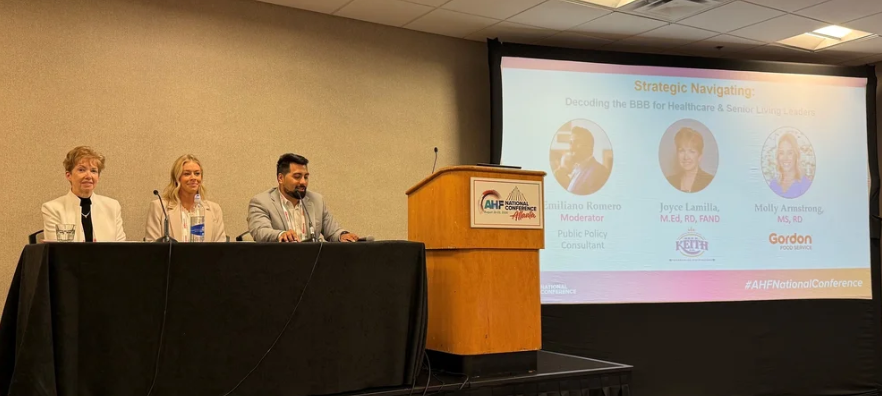
Key Takeaways from DMA's AHF Educational Session
DMA was proud to sponsor and present the AHF educational session, Strategic Navigating: Decoding the BBB for Healthcare & Senior Living Leaders, featuring industry experts from Ben E. Keith, Gordon Food Service, and healthcare policy leadership. The session explored how proposed Medicaid reforms and reimbursement changes may impact healthcare and senior living foodservice operations.
Key Takeaways
Medicaid funding changes could create additional financial pressure for operators.
Foodservice budgets remain under strain as inflation and labor costs continue to rise.
Technology, menu optimization, and operational efficiencies are becoming increasingly important.
Operators should explore new revenue opportunities and strengthen advocacy efforts to navigate future changes.
Healthcare foodservice leaders must be prepared to translate regulatory changes into meaningful business conversations with executive leadership.
Interested in the full presentation deck? Email charley.orwig@dmadelivers.com to receive the deck.

Growing the DMA Network
We're very excited to welcome Driscoll Foods and Kuna Foodservice as our newest distributor members. Their addition strengthens our growing community and expands the impact we deliver together.
Visit our LinkedIn post to meet our newest members and learn more about their organizations.
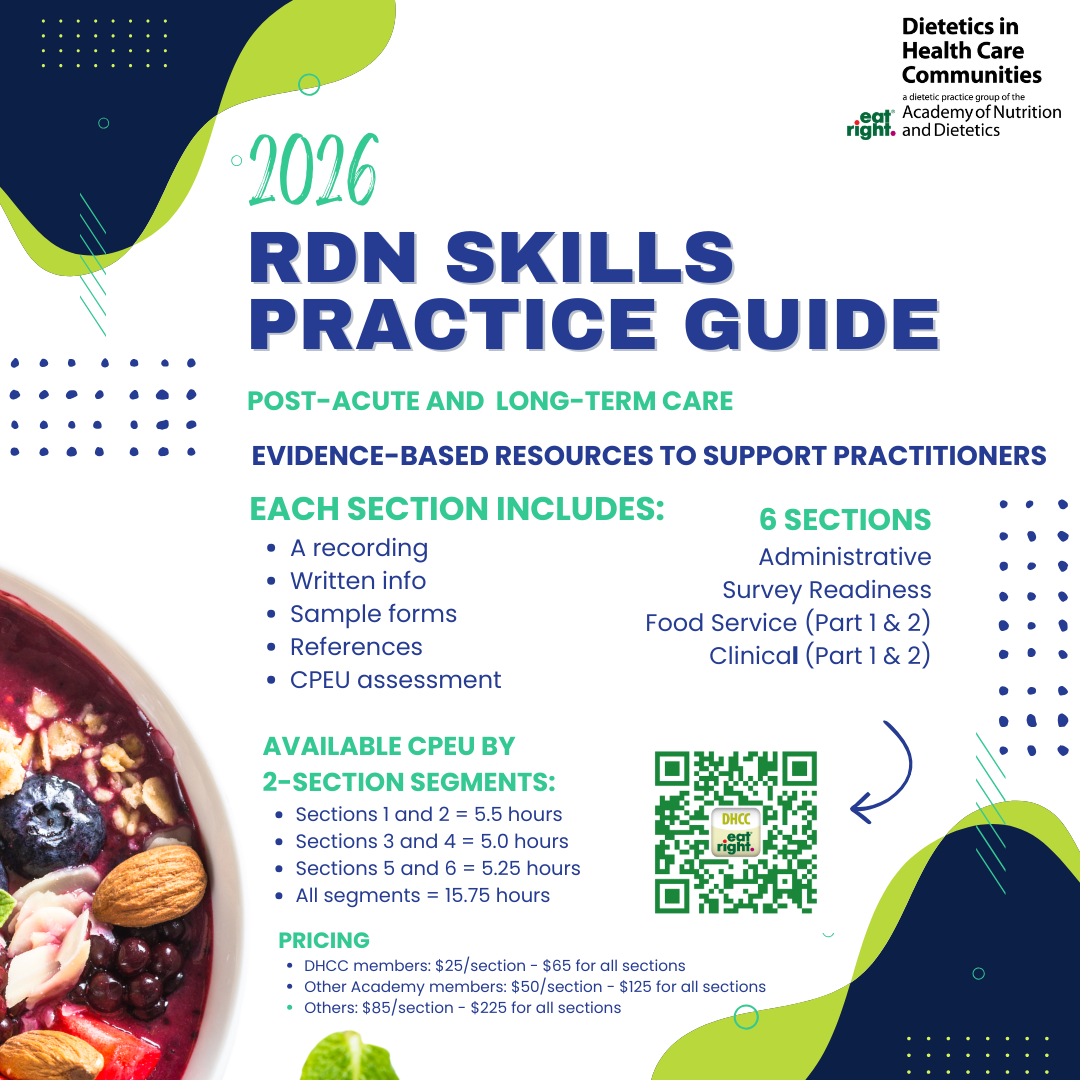
New Resource for Long-Term Care Nutrition Professionals
The Academy of Nutrition & Dietetics has released a new publication designed specifically for long-term care foodservice professionals. The resource provides practical guidance, industry best practices, and evidence-based insights to help operators navigate the evolving demands of healthcare and senior living dining. Topics include nutrition management, foodservice operations, regulatory considerations, and strategies to support both resident outcomes and operational success.
Whether you're looking to enhance resident satisfaction, strengthen nutrition programs, improve compliance efforts, or explore emerging trends in long-term care dining, this publication offers valuable tools and resources for today's foodservice leaders.
Simplify Your Shift Shutdown, Thanks to Dawn® PRO Hi-Temp Grill Cleaner

This year, give your business its most valuable resource back: time. The new Dawn PRO Hi-Temp Grill Cleaner is designed to work directly on hot grills (300-350°F), completely eliminating the frustrating cooldown wait at the end of a long shift. From the #1 grease-fighting brand, this ready-to-use formula dissolves stubborn, carbonized grease on contact, making your end-of-shift shutdown faster and more efficient. See how this product can transform your kitchen's productivity.

DiningRD Introduces AI-Powered Menu Personalization
DiningRD’s Fall/Winter menus are now available in PlateFul, just in time for seasonal planning.
This year, communities have a new way to make those menus their own with Dietitian Intelligence, DiningRD’s approach to combining AI with the expertise of dietitians and senior living dining professionals.
MenuPlanner Plus uses AI to help customize menus based on resident preferences, regional favorites, cuisine styles, seasonal dishes, and other community needs. After changes are made, Approve My Menu can automate the Registered Dietitian review and signature process - making it simpler than ever to plan, personalize, and serve a menu designed for your residents.
Learn More: DiningRD
Industry Trend: Adapting to New Senior Living Food Trends
Senior living dining programs continue to evolve as resident expectations shift beyond traditional meal service. Operators are expanding menu variety, offering more dietary flexibility, and introducing restaurant-inspired concepts designed to create a more engaging dining experience. According to industry leaders, today's residents are seeking greater choice, bolder flavors, healthier options, and dining experiences that reflect current restaurant trends.
Key trends shaping senior living dining include:
Expanded menu variety and made-to-order options
Greater demand for dietary accommodations, including gluten-free and plant-based choices
Themed dining experiences and cultural cuisine offerings
Increased focus on resident engagement through food and hospitality
More casual and flexible dining concepts that mirror the consumer restaurant experience
Why it matters: Dining has become a major driver of resident satisfaction and a growing point of differentiation for senior living communities. Operators that successfully balance personalization, nutrition, and operational efficiency are better positioned to meet the expectations of current residents while attracting the next generation of seniors.
Source: Senior Housing News
Industry Trend: Digital Dining Tools Gain Momentum in Senior Living Communities
Technology continues to play a larger role in senior living dining operations as communities look for ways to improve efficiency while enhancing the resident experience. Digital ordering platforms, resident dining apps, tablets, and integrated point-of-sale systems are becoming more common, giving operators new opportunities to personalize service and streamline meal ordering processes.
As adoption grows, industry experts stress the importance of designing technology with older adults in mind. Successful platforms prioritize accessibility and ease of use, helping residents engage with digital tools while maintaining the personalized service they expect.
Features gaining attention include:
Larger text and high-contrast displays
Simplified navigation and intuitive user experiences
Voice-enabled ordering capabilities
Options for family members or caregivers to assist with ordering
Flexible ordering methods that continue to support in-person and phone interactions
Why it matters: As Baby Boomers enter senior living communities with higher technology expectations, operators are evaluating how digital tools can support personalization, expand dining choice, and improve operational efficiency without sacrificing hospitality. Creating technology solutions that are both accessible and resident-friendly will be critical to long-term success.
Source: Food Service Update