Senior Living + Healthcare April 2026

Featured Opportunity: DMA Food Tour at Argentum
Headed to Argentum in Nashville? Kick off the week with DMA on our private food tour — a relaxed, small‑group networking opportunity designed specifically for senior living operators before the conference calendar fills up.
This experience is about connection first. Think local bites, real conversation, and time to build relationships with peers before the busy pace of the conference begins. It’s an easy, informal way to connect with fellow healthcare foodservice leaders in a fun, low‑pressure setting.
Spots are limited and filling up quickly.
Source: Datassential’s Senior Living Pulse – Market Overview
Senior Living Market Overview: Key 1‑Year Data Changes
According to Datassential’s Senior Living Pulse – Market Overview, senior living operators are entering 2026 with stronger optimism and a clearer focus on where to invest time, resources, and capital. Operators are evaluating performance through a more targeted lens, balancing financial discipline while continuing to prioritize resident experience and operational effectiveness.
Key Takeaways
Operators report increased optimism moving into the new year, reflecting greater confidence in planning and decision‑making
Menu improvements and smarter sourcing remain top priorities, as operators look to enhance quality while maintaining cost awareness
Selective cost control measures are being implemented across operations, rather than broad, across‑the‑board reductions
Targeted technology investments are supporting efficiency, consistency, and improved outcomes
Together, these insights highlight an industry navigating meaningful change — one that is focused on sustainability, performance, and delivering value to residents through intentional foodservice and nutrition strategies.

Source: Gordon Food Service
Shaping a Successful AI Strategy in Foodservice Operation
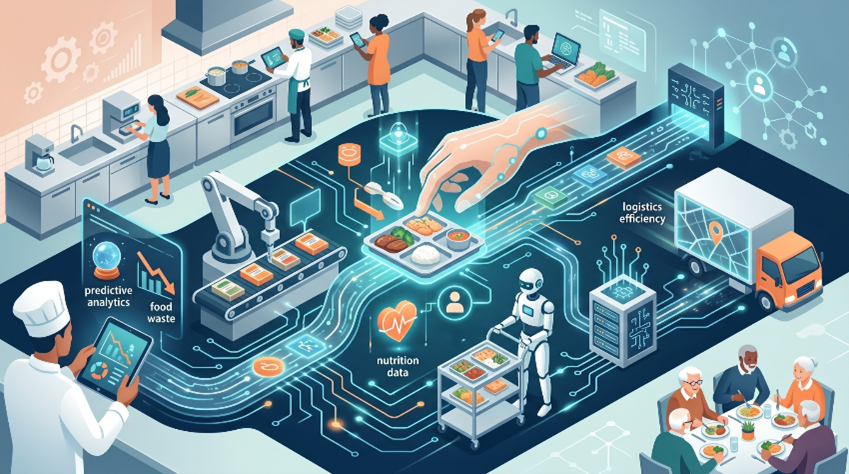
From the kitchen to the bedside, artificial intelligence is no longer aspirational — it’s operational. Across healthcare foodservice, AI is increasingly being used as a practical tool to support staff, streamline workflows, and improve both operational efficiency and resident outcomes.
Rather than replacing human decision‑making, AI is being applied to augment everyday processes, allowing teams to focus more time on care, quality, and service.
How AI Is Being Used Today
Reducing food waste through predictive analytics that improve forecasting and purchasing decisions
Automating routine and time‑consuming staff tasks, freeing teams to focus on higher‑value activities
Tailoring nutrition approaches to support better resident outcomes through data‑driven insights
At Gordon Food Service, they are actively curating tools designed to support you and your teams.
Share Your AI Use Cases
Healthcare operators are encouraged to share how AI is currently being used within their foodservice operations. These real‑world examples help shape future learning opportunities and peer‑to‑peer knowledge sharing.
Share Here - Submissions will be reviewed to help inform future training efforts and best‑practice sharing across the GFS community.
Upcoming Webinar: AI in Action
This webinar will explore how healthcare foodservice peers are using simple, accessible AI tools to address everyday operational challenges. The session will focus on practical use cases and clear takeaways that can be applied immediately.
Topics include:
Automating PPD calculations
Menu cross‑utilization strategies
Instant training translations for frontline staff
What to expect from strategic business partners as technology continues to evolve
June 4, 2026 | 3:00 PM ET | Register Here

Insect Control for Your Business, Thanks to Zevo®

Source: Academy of Nutrition & Dietetics
RDN Skills Practice Series: Post‑Acute & Long‑Term Care
The RDN Skills Practice Series for Post‑Acute and Long‑Term Care (PALTC) is redefining high‑impact nutrition practice in skilled nursing and long‑term care settings. Developed by more than 25 expert Registered Dietitian Nutritionists, this six‑module, evidence‑based series delivers practical tools specifically tailored to PALTC environments.
The program is designed to support RDNs in strengthening both clinical and operational competencies, while aligning nutrition practice with regulatory requirements and organizational goals.
What the Series Covers
Administrative responsibilities of the RDN in PALTC settings
RDN related to food service management, sanitation, and safety fundamentals
Survey readiness and effective interdisciplinary communication
PDPM revenue optimization and documentation support
Clinical care accountability and best practices
And more
Education is delivered through a combination of recordings, written materials, sample forms, reference documents, and CPEU assessments, allowing participants to engage with the content in flexible, practical ways.
Program Structure
Six sections total: Administrative, Survey Readiness, Food Service Parts 1 & 2, Clinical Parts 1 & 2
Available for purchase in two‑section segments or as a complete series
Total of 15.75 CPEUs upon full completion

Source DiningRD
What the New Guidelines Mean for Senior Dining
Updated dining and nutrition guidelines continue to influence how senior living communities approach menu development, resident choice, and overall dining experience. As expectations around personalization, quality, and wellness evolve, operators are being asked to balance regulatory guidance with resident satisfaction and operational realities.
This recent blog post explores how the new guidelines are shaping senior dining programs, from nutrition standards and ingredient considerations to service models and meal flexibility. It also examines how foodservice leaders can interpret guidance in ways that support both compliance and innovation.
For healthcare foodservice teams, these updates reinforce the importance of aligning dining strategies with broader goals around resident engagement, quality of life, and clinical outcomes—while remaining adaptable as guidelines and expectations continue to shift.